
December 2025 — the field after clearing the grass
A hazelnut orchard begins
in a small village
in northeastern Japan.
From the village to the world.
- Area
- 0.8ha80 ares
- Trees
- 400Planted over five years
- Planting
- 2027.02First trees go in
- Location
- HirataFukushima, Japan
Where we are
Wild Hazel & Star Japan is a new hazelnut orchard in Hirata, a small village in the Abukuma Highlands of Fukushima Prefecture. We are turning 0.8 hectares of abandoned farmland into an orchard of 400 hazelnut trees, planted step by step over five years from February 2027.
Why hazelnuts
In Hirata, as in many rural villages in Japan, fields are being left behind as their owners grow older. Once abandoned, they are soon covered by tall grass. Cutting the grass is not enough. Something has to grow there again.
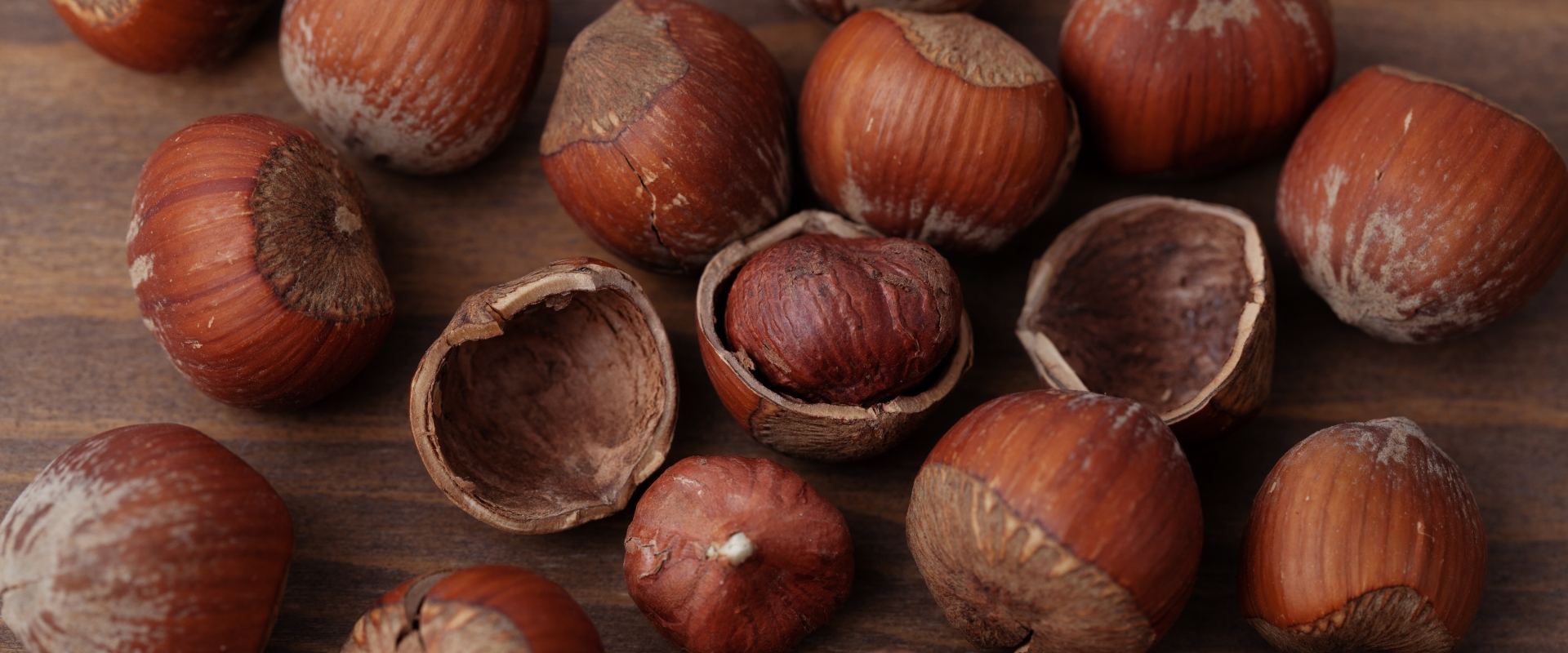
Almost all hazelnuts used in Japan are imported. More than 95% of the shelled hazelnuts Japan imports come from Turkey. Hazelnut trees like cold winters, and once they take root, they bear nuts for decades. We believe this land suits them well.
The star in the soil
In parts of Nakadori, central Fukushima, people have long eaten a small mushroom called mamedango. It grows in the soil as a round ball, and is cooked in miso soup or with rice. As it matures, it opens into the shape of a star.
Mamedango takes its nourishment from the roots of trees. Trials have shown that it grows well with trees of the hazel family, so we chose hazelnuts. We will grow both in one field: nuts on the branches, and mushrooms at the roots. The “Star” in Wild Hazel & Star Japan is this star in the soil.
Tonda Gentile Trilobata
We grow a single variety from Piedmont, Italy. Tonda Gentile Trilobata has long been used by European confectioners: the nuts are round and even in size, the skin comes off easily after roasting, and the aroma is rich.
Progress so far
-
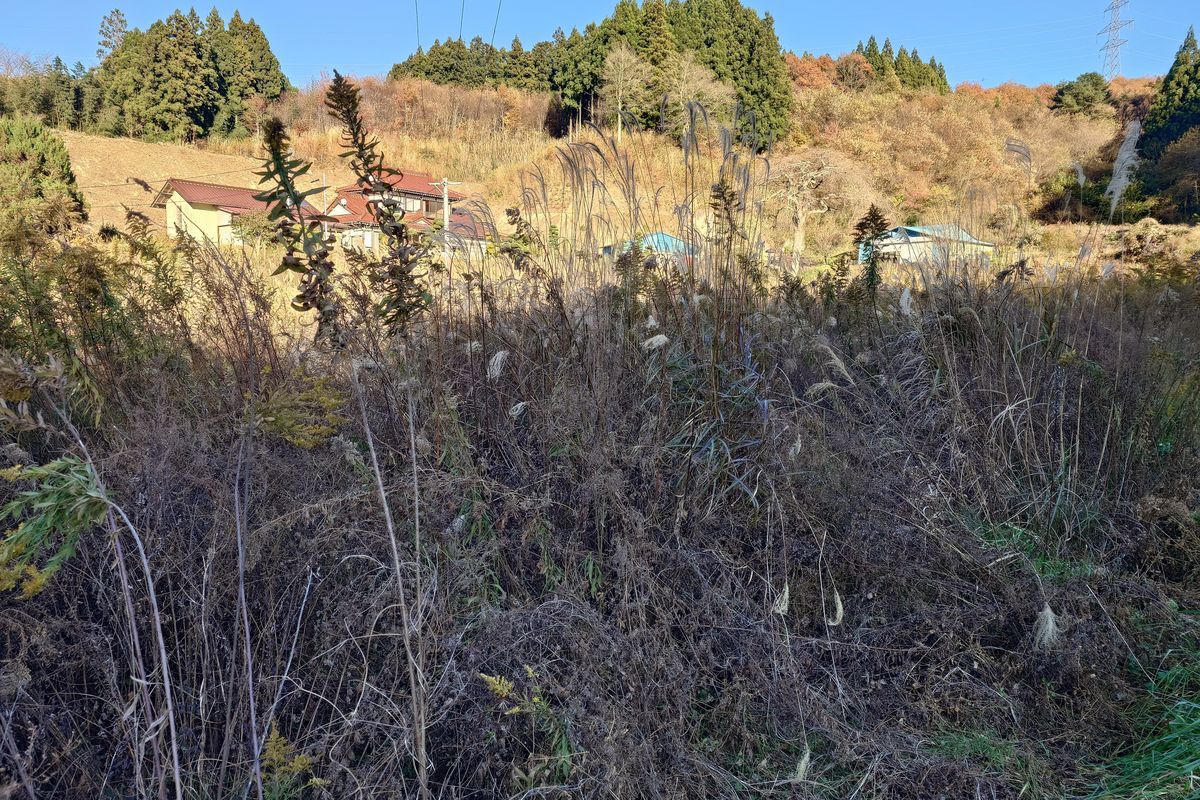
Covered with tall grass -
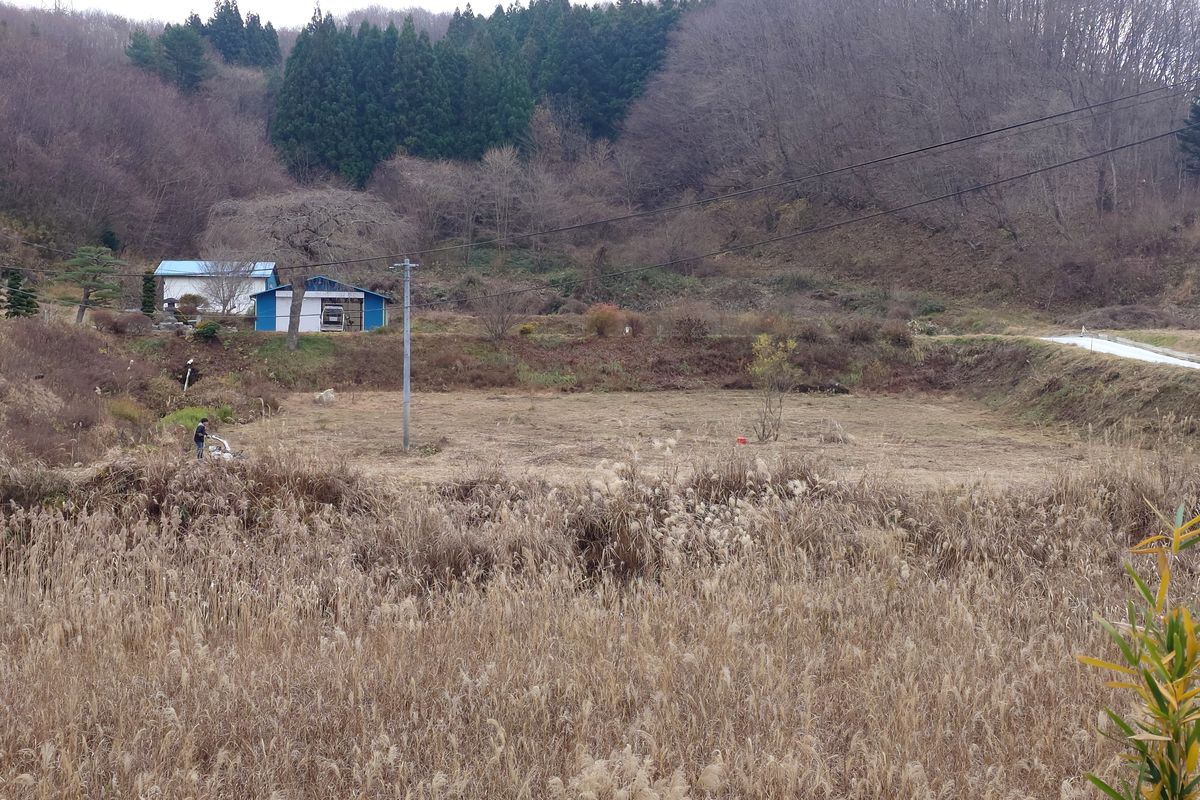
Clearing the grass -
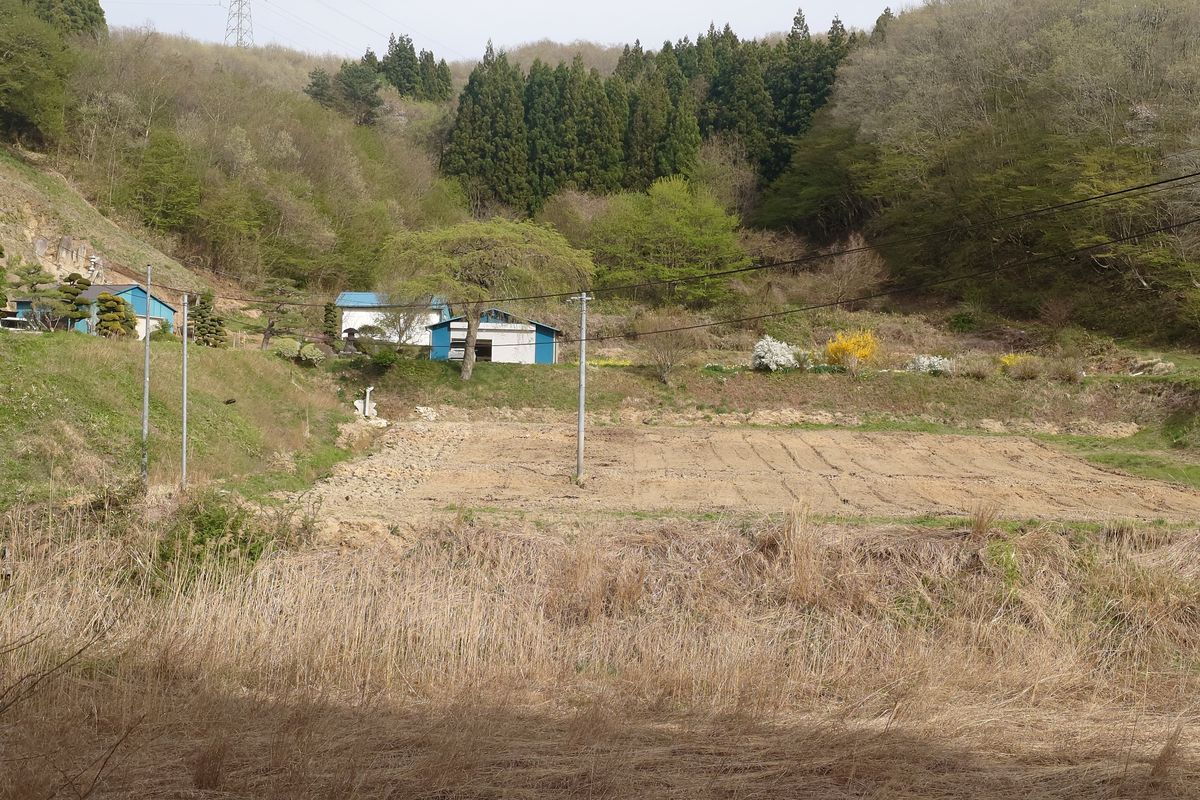
Tilling the soil -
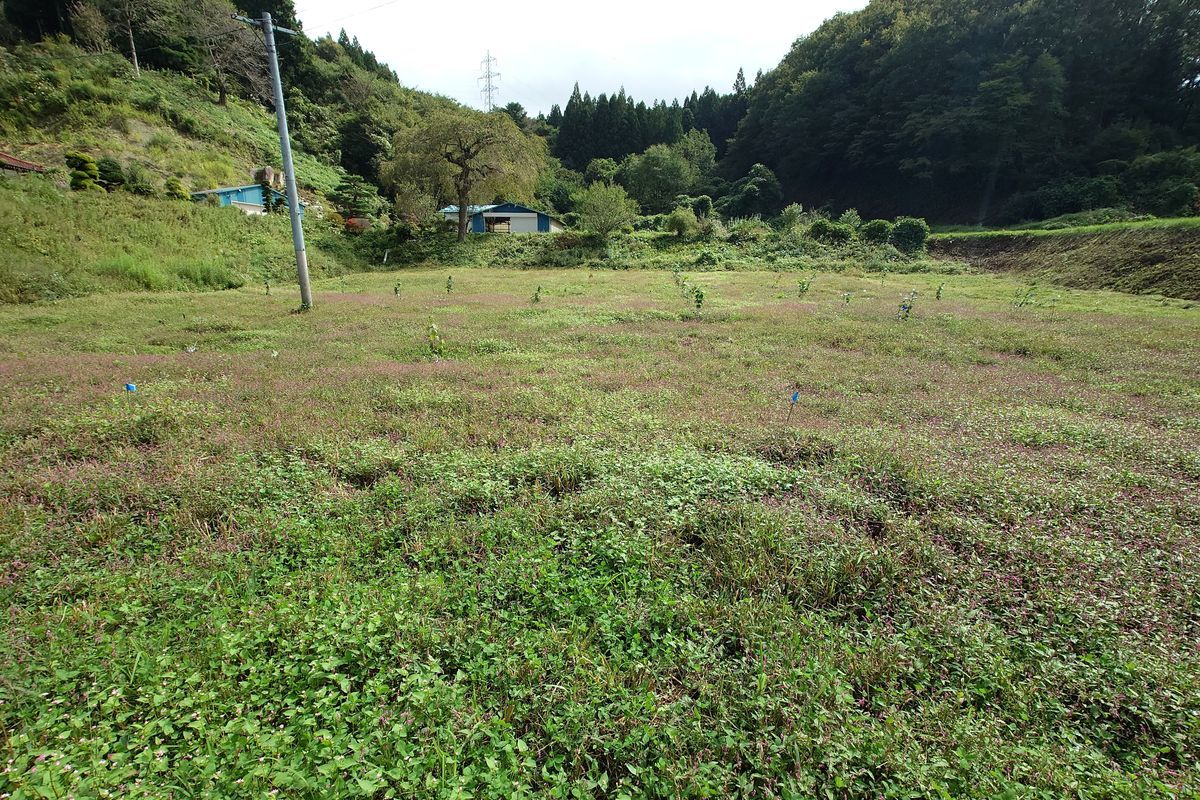
The field in September
Visit and help
We are looking for people who would like to help in the field as volunteers, whenever and however much they can. Visits are welcome too. Please let us know the date you would like to come.
Contact
We welcome inquiries from confectioners, food companies, the media, and anyone who would like to visit or help. Please contact us through our contact form.