
OUR STORY
From the village
to the world
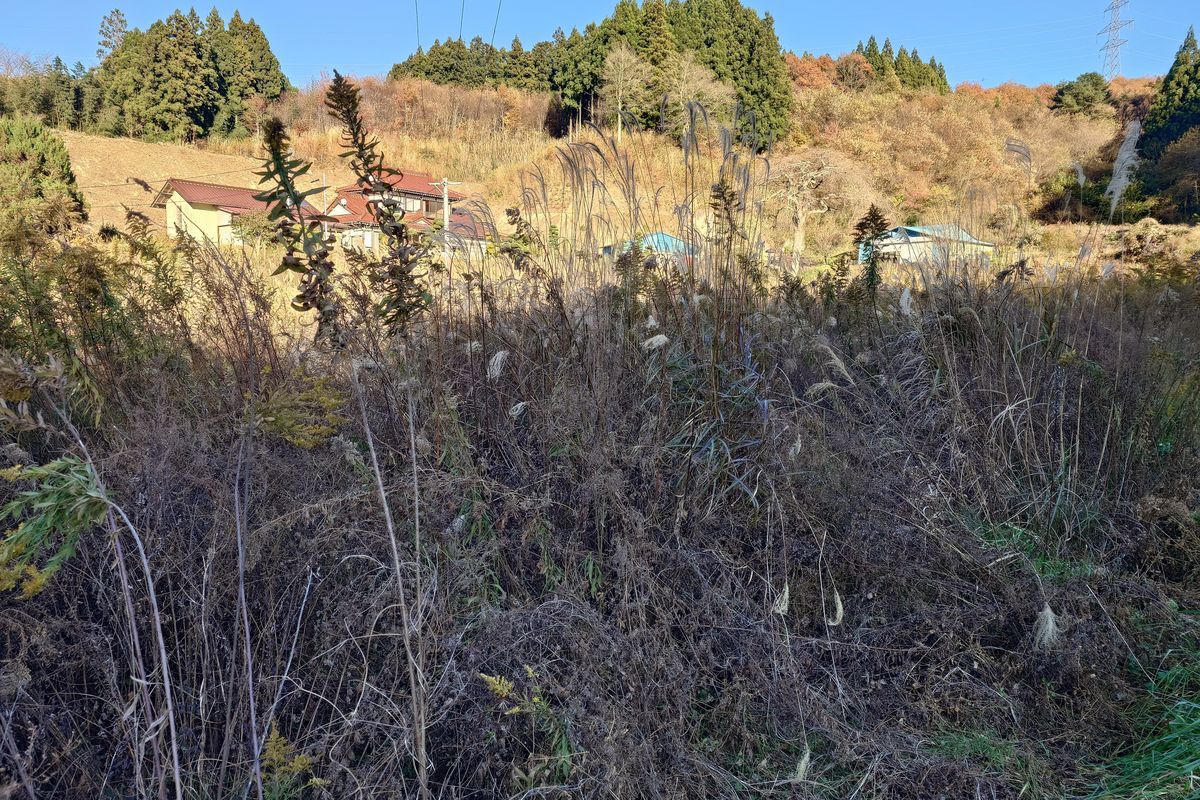
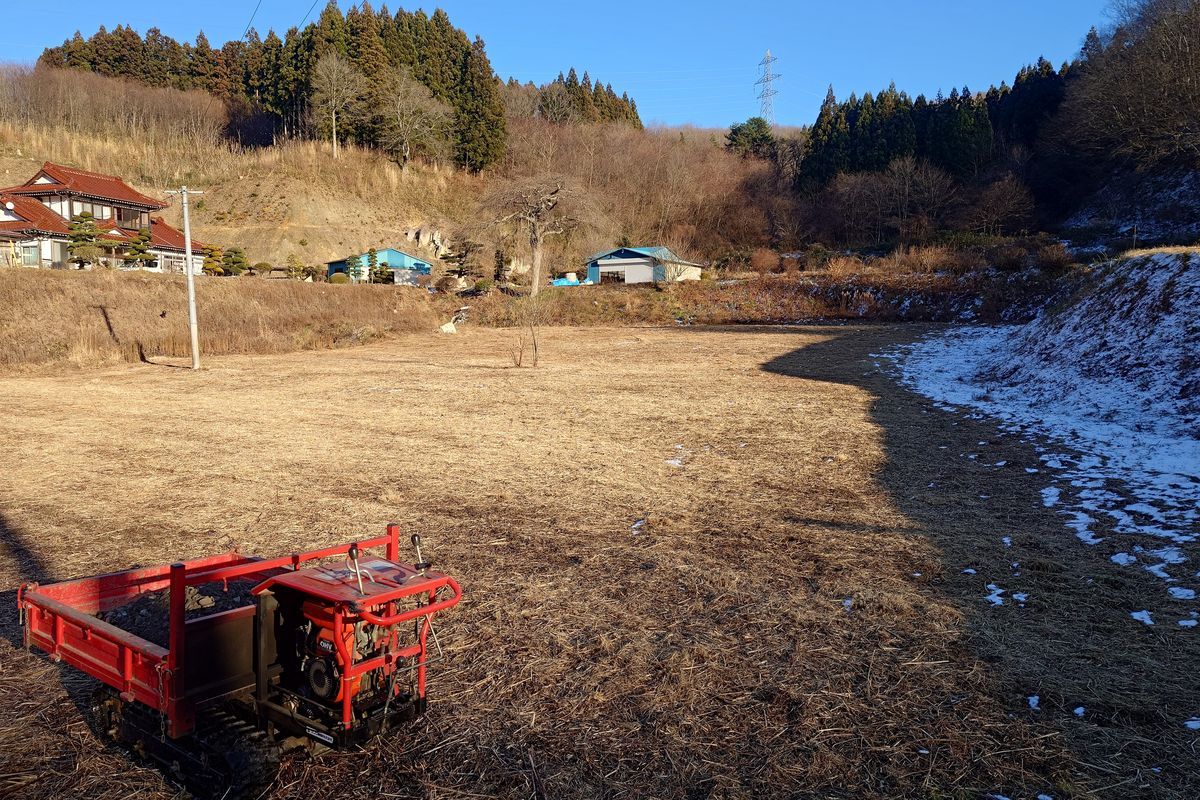
November 2025 — the field before we started
In Hirata, a small village in Fukushima, we are borrowing fields that their owners can no longer farm and turning them into a hazelnut orchard. This is why we chose this village, and why we chose this tree.
Watching the grass take over, year after year
Hirata is a village in Fukushima Prefecture where the population is shrinking and more and more families can no longer keep up their fields. About 38% of the people here are 65 or older.
When a field loses its owner, grass takes over. Every summer it grows taller than a person, and soon wild boars and masked palm civets hide in it. Then the neighboring field is damaged, and that family gives up too. This is how abandoned land slowly spreads.
We run an insurance agency in this village. Visiting homes, we often heard the same words:
“I want to cut the grass, but I don’t have the strength anymore.
My son lives far away and can’t come back.
What should I do?”
Nobody asked us to take care of their land. But people were struggling, and we had been hearing it for years.
Cutting the grass does not bring land back
We could offer to cut the grass. But it grows back no matter how often you cut it, and the same work repeats every year.
We came to believe that land comes back to life only when something is growing on it.
So what should we plant? Rice and vegetables need constant care every year, which is hard to manage alongside our main work. While searching, we found hazelnuts.
Why hazelnuts
The star in the soil
Besides hazelnuts, we grow one more thing: mamedango, a small mushroom that people in parts of central Fukushima have eaten for generations. It grows as a round ball in the soil and is cooked in miso soup or with rice.
Mamedango could be found only where people kept visiting the hills and fields and looking after them. As fewer people came and the land was left alone, it disappeared even from its old spots, and today it is rare and expensive. We wanted to clean up the land so that mamedango could grow again. That is how this began.
Mamedango takes its nourishment from the roots of trees, and trials have shown that it grows well with trees of the hazel family. So we decided to plant hazelnuts and grow mamedango at their roots. Seedlings inoculated with mamedango are growing now.
When it pushes out of the ground, mamedango opens into the shape of a star. The “Star” in Wild Hazel & Star Japan is this star in the soil.
Almost none are grown in Japan
More than 95% of the hazelnuts Japan imports come from Turkey, and Japanese-grown hazelnuts are almost never seen in shops. If we grow them, there will be people who need them.
They like cold winters
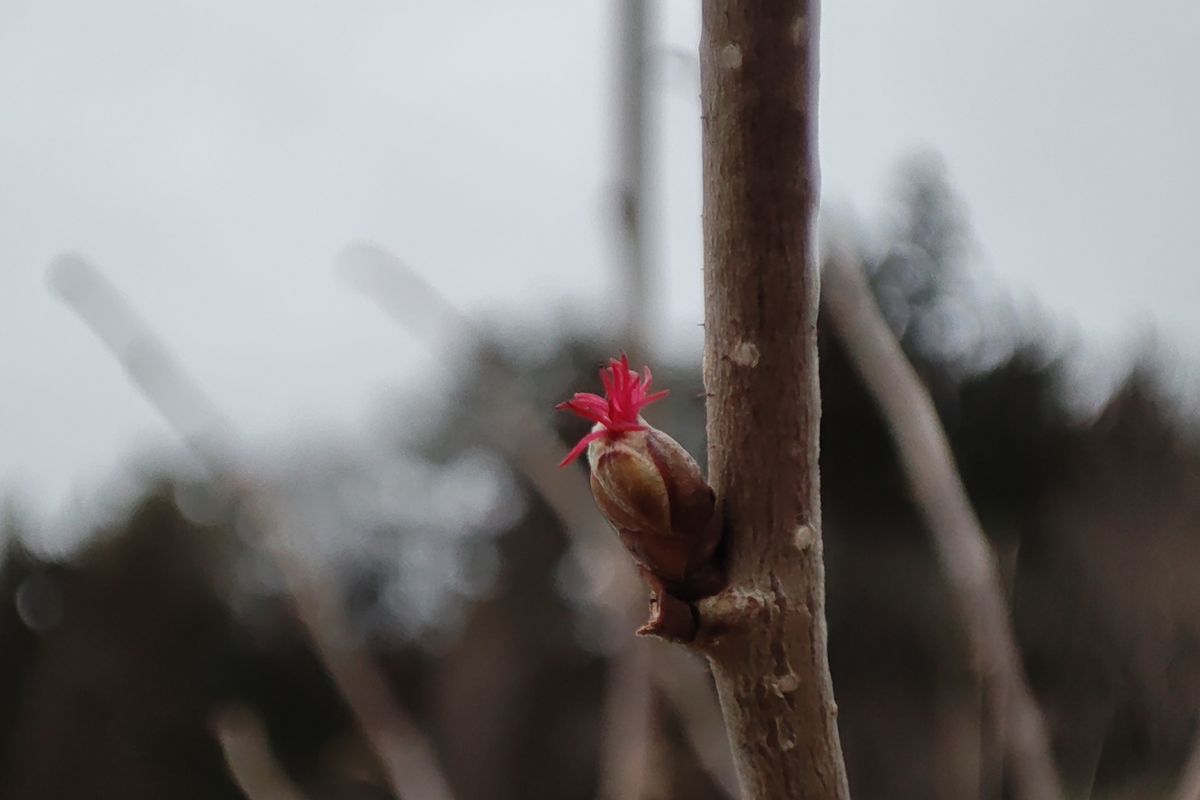
Hazelnut trees prefer cool climates and bloom only after a cold winter. With large temperature swings and good water and soil, this land has much in common with the world’s main growing regions.
Plant once, harvest for decades
Hazelnuts are not replanted every year. Once a tree takes root, it bears nuts for decades — just what we need to look after borrowed land for a long time.
Hot peppers and buckwheat guard the field
We plant habanero peppers around the edge of the field. Wild boars are the biggest threat in the Abukuma Highlands, and they stay away from the burning heat of habaneros. Instead of nets or electric fences, the crop itself becomes the wall. Hirata is known for its habanero powder, and our peppers will go there.
Between the trees we sow buckwheat. It sprouts quickly and covers the ground before summer weeds grow, so there is almost no weeding to do. After harvest, it goes back into the soil as nourishment.
Even the shells go back to the village
Nearly half the weight of a hazelnut is its shell. Usually it is thrown away, but we will turn it into charcoal. Charcoal made by slow, low-oxygen burning keeps the carbon the tree absorbed locked inside instead of releasing it into the air. Spread on the field, it improves the soil. Nothing goes to waste.
What comes next
- Winter 2025Clearing the grass from the abandoned field
- 2026Tilling the soil and preparing the field; explaining the project to our neighbors
- Feb. 2027Planting the first trees
- BeyondThe first harvest. Then roasting and paste-making, for confectioners in Fukushima and around the world
It will take years before the trees bear nuts, and not everything will go to plan. We will keep going until we can say, “It all started with that first tree.”