
HAZELNUTS
A nut Japan
almost never grows
Hazelnuts are everywhere in chocolate and baked goods, yet Japan grows almost none of its own. Here is where Japan’s hazelnuts come from, the variety we grow, and how the tree spends its year.
More than 95% come from Turkey
95%+
Share of Japan’s shelled hazelnut imports that come from Turkey
According to Japan’s trade statistics (Ministry of Finance), more than 95% of the shelled hazelnuts Japan imports come from Turkey, and most of the rest from Italy. Almost every hazelnut sold in Japan has crossed the sea.
Relying on a single country means that one bad season there moves the price. In years when frost hit Turkey’s orchards, hazelnut prices rose sharply.
Domestic production is still tiny
A few growers in Japan do grow hazelnuts, mainly in Nagano Prefecture, where trial cultivation began in 2013. Local varieties such as “Haruna” (Gunma), “Shinano Hashibami” (Nagano) and “Iwate No. 1” (Iwate) exist, but only in small amounts. Japan does not yet have a true hazelnut-growing region.
In the southern Tohoku region, no other orchard is growing hazelnuts on this scale. We are starting with 400 trees in Hirata, Fukushima.
Our variety: Tonda Gentile Trilobata
Tonda Gentile Trilobata
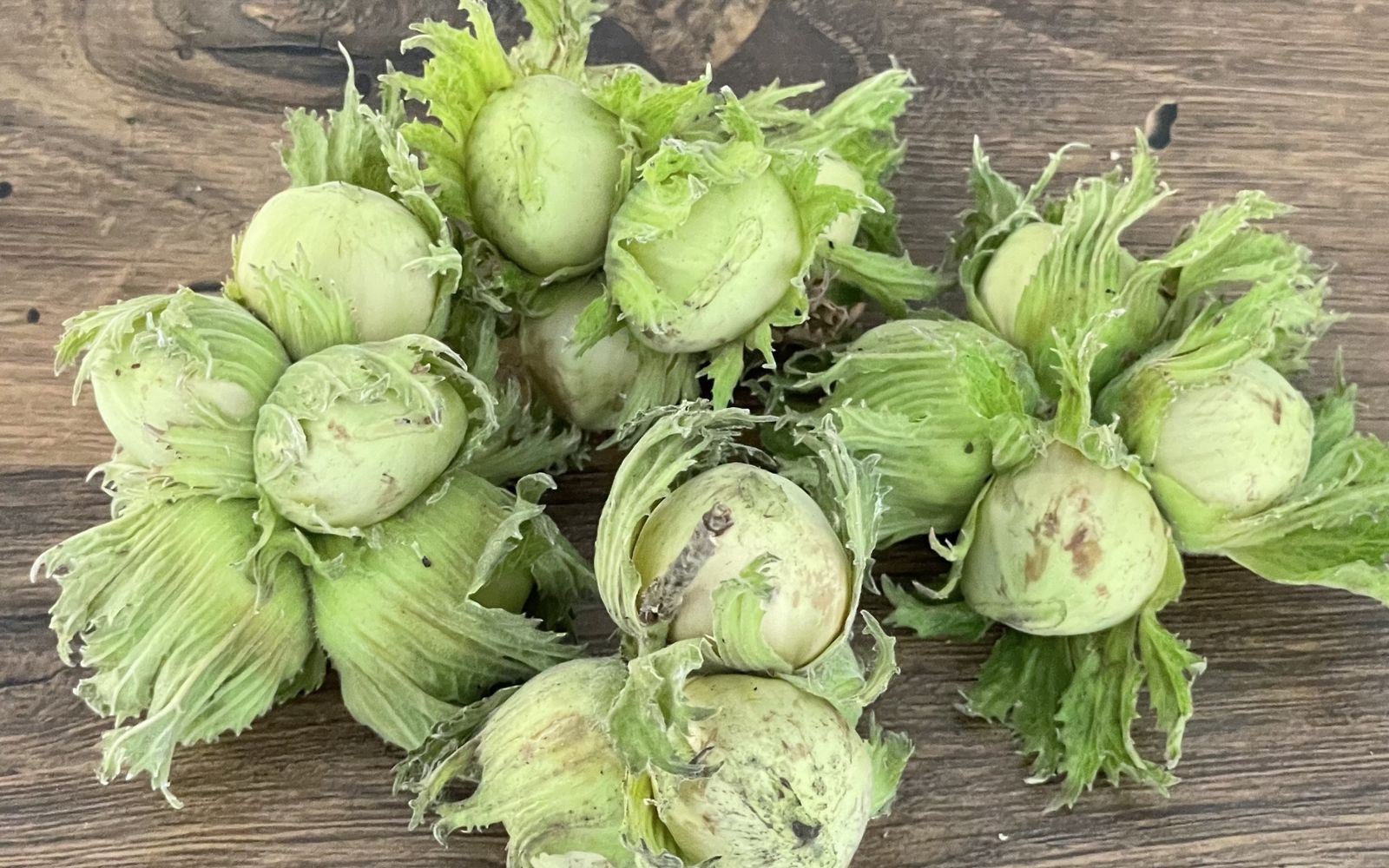
In Italian, the name means “round, gentle, three-lobed”; the green husk around the nut splits into three. The variety comes from the Langhe area of Piedmont in northwestern Italy, where it is protected as “Nocciola Piemonte” under a Protected Geographical Indication (IGP), registered in the EU in 1996.
European confectioners have long used it for three reasons:
- The skin comes off easily after roasting, leaving no bitterness.
- The nuts are round and even in size, which shows in the finished product.
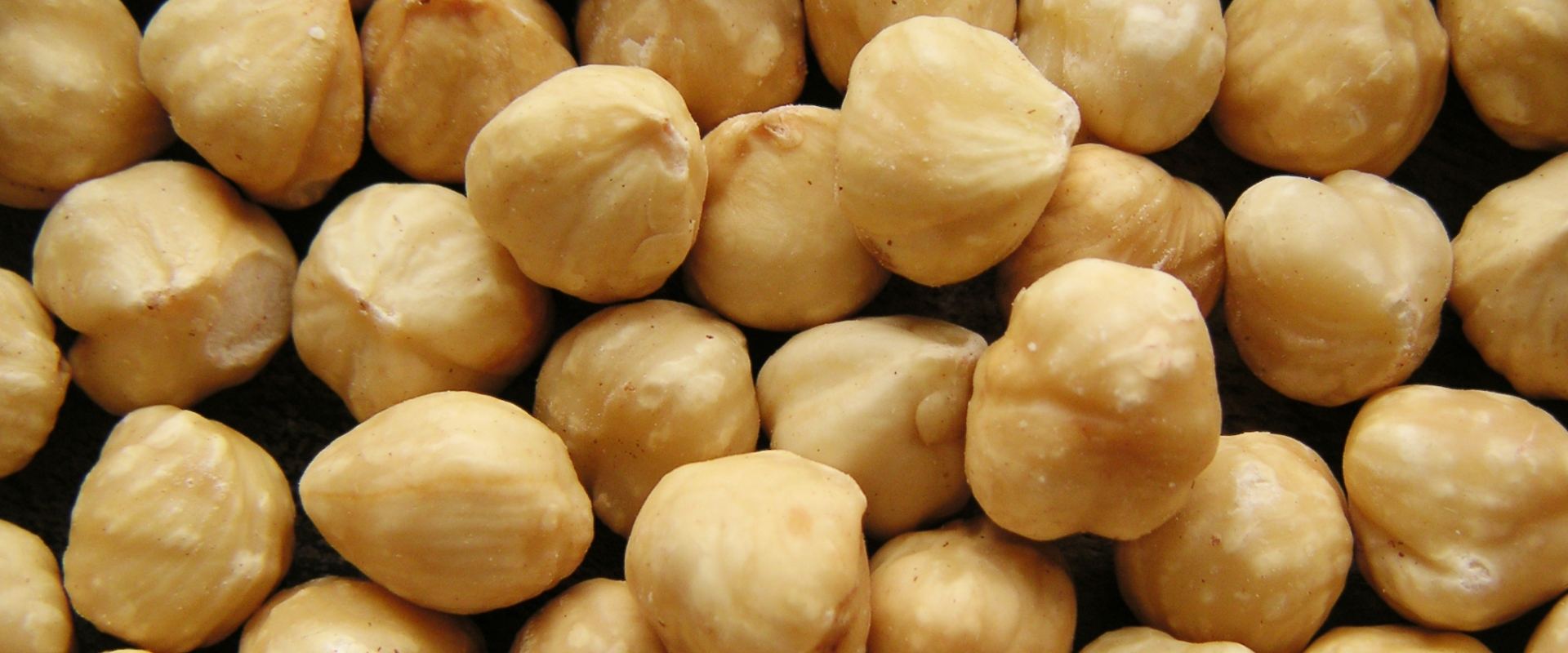
- The aroma is strong once roasted — the flavor behind gianduja and many European sweets.
A year in the life of a hazelnut tree
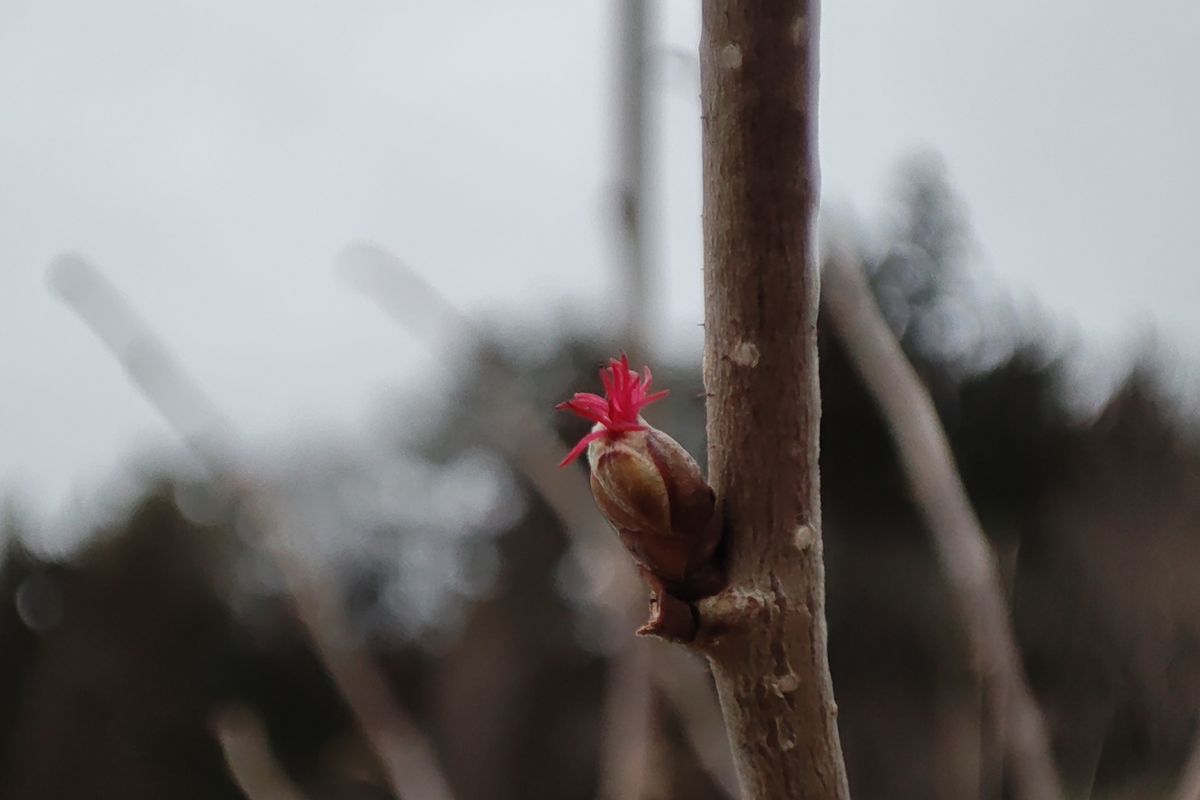
- WinterThe tree blooms on bare branches. Yellow catkins release pollen into the wind, and tiny red female flowers peek out of the buds. Pollen from the same variety rarely sets nuts, so orchards usually plant other varieties nearby as pollinators.
- SpringRound, toothed leaves open. The pollen waits inside the flower; the nut is said to start developing only in early summer.
- SummerNuts grow inside frilly green husks, two or three together at the tips of the branches.
- AutumnRipe nuts turn brown and drop to the ground. Harvesting means gathering them from the ground, then drying them in their shells.
Trees generally begin to bear nuts three to four years after planting, and yields settle some years after that. Once established, they keep bearing for decades.
How hazelnuts are enjoyed
Lightly roasted with a pinch of salt, they make a simple snack. Ground, they go into cookie dough or become a paste to mix with chocolate — spreads, pralines, gianduja and gelato (“nocciola” in Italian). Chopped, they add crunch to salads, and their oil is used in dressings.